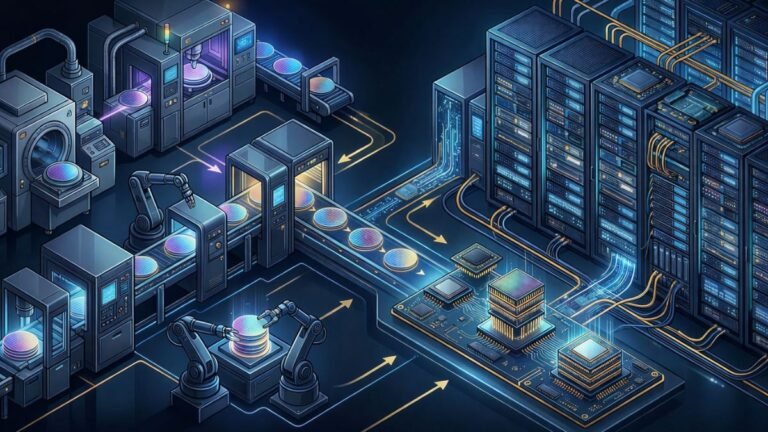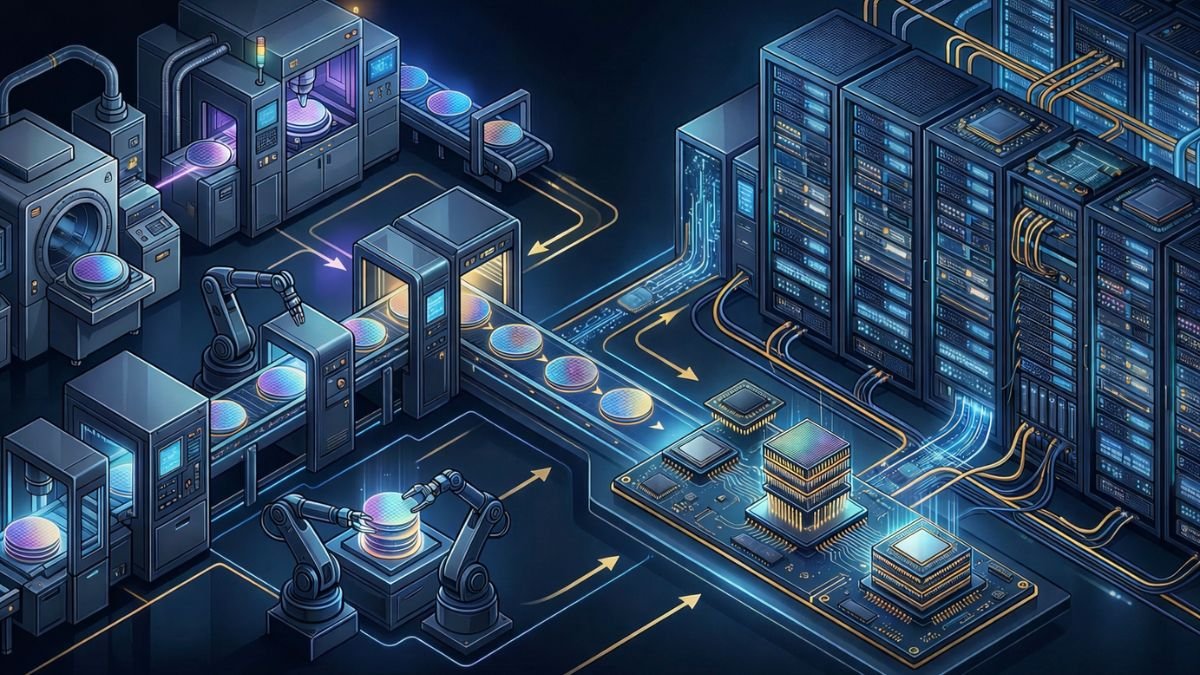
AI Infrastructure & Semiconductor Supply Chain: The Backbone of Future Technology
AI Infrastructure & Semiconductor Supply Chain: Today’s world is rapidly becoming digital, and at the very center of this transformation stands Artificial Intelligence (AI). Whether it is smartphones, healthcare, the automotive industry, or the finance sector—the impact of AI is clearly visible everywhere. However, the most critical foundation required to power this entire ecosystem consists of AI infrastructure and the semiconductor supply chain. These two elements, though often invisible, serve as the bedrock upon which the entire world of modern technology rests.
What is AI Infrastructure, and Why is it Essential?
AI infrastructure refers to all the technical resources necessary to build, train, and operate AI systems. This includes hardware components such as data centers, cloud computing platforms, high-performance servers, and GPUs (Graphics Processing Units).
Training AI models requires immense amounts of data and processing power. For instance, when a company develops a chatbot or a facial recognition system, it must process millions—or even billions—of data points. This task cannot be accomplished using standard computers; it demands a robust and specialized infrastructure.
Furthermore, as the adoption of AI continues to grow, so does the demand for real-time processing capabilities. Consequently, companies are now investing in more advanced and scalable infrastructure to effectively meet these rapidly evolving requirements.
The Importance of the Semiconductor Supply Chain
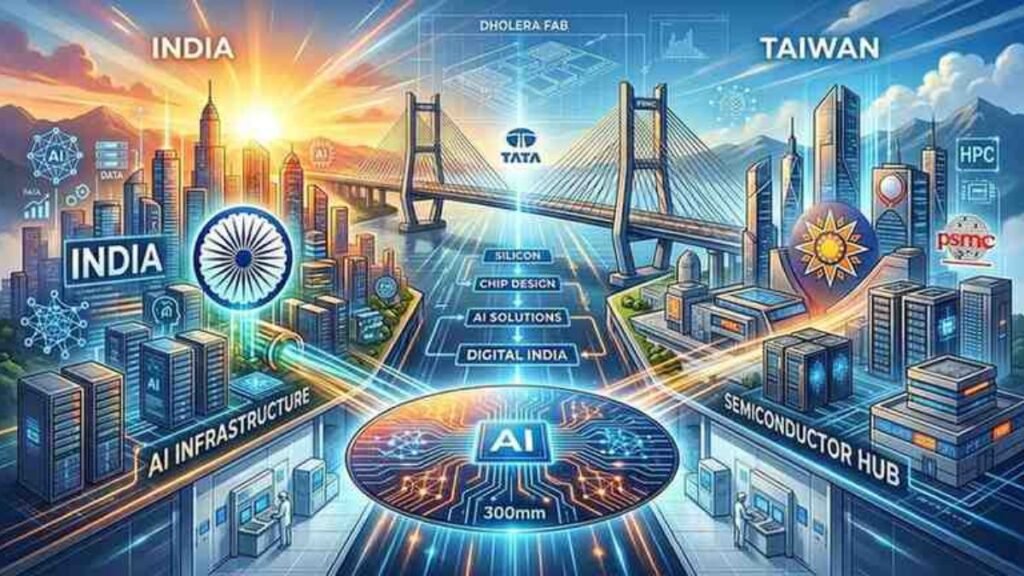
Semiconductors—commonly referred to as “chips”—are the heart of every electronic device. Smartphones, laptops, automobiles, medical equipment—everything relies on these chips. They play a pivotal role in the advancement of AI as well, given that AI systems require specialized types of processors to function.
The semiconductor supply chain is a complex, global network encompassing numerous processes, including design, manufacturing, testing, and distribution. This chain involves a multitude of countries and companies, making it a highly sensitive and delicate ecosystem. In recent years, the world has faced a chip shortage, causing significant losses across numerous industries. This has made it abundantly clear just how crucial stability and resilience are within the semiconductor supply chain.
The Interplay Between AI and Semiconductors
AI and semiconductors are complementary to one another. Advancing AI requires increasingly powerful chips, while AI itself is being utilized to design new chips. This creates a virtuous cycle in which each drives the progress of the other.
For instance, AI-based chips—such as Neural Processing Units (NPUs)—are specifically designed for machine learning and deep learning applications. These chips are faster and more energy-efficient than traditional processors.
Conversely, AI is also being leveraged to make the chip design and manufacturing processes more precise and efficient. This helps reduce costs and accelerate production speeds.
Challenges and Future Directions
Although AI infrastructure and semiconductor supply chains are evolving rapidly, they still face several challenges. The most significant challenges are high costs and technical complexity; manufacturing advanced chips requires multi-billion dollar investments and state-of-the-art technology.
Furthermore, geopolitical tensions also impact supply chains. Many nations are now striving to boost their domestic chip manufacturing capabilities in an effort to reduce their reliance on external sources.
In the future, we can expect to see AI systems that are smarter, faster, and more energy-efficient. Realizing this vision will require both the underlying infrastructure and the supply chains to be robust and sustainable.
Conclusion
AI infrastructure and semiconductor supply chains constitute the true backbone of the modern technological world. Without them, neither the advancement of AI nor the expansion of the digital economy would be possible. As the world becomes increasingly technology-driven, the importance of these two sectors will only continue to grow.
Therefore, it is imperative that governments, corporations, and research institutions collaborate to invest in these sectors and ensure they are fully prepared for the future. This is the foundation upon which the entire technological world of the future will stand.
FAQs
Q. What is AI infrastructure?
A. AI infrastructure includes hardware and systems like data centers, GPUs, and cloud platforms used to build and run AI models.
Q. Why are semiconductors important for AI?
A. Semiconductors power the chips that process AI tasks, making them essential for performance and speed.
Q. What is a semiconductor supply chain?
A. It is the global network involved in designing, manufacturing, testing, and distributing chips.
About the Author